AI Automation for SMEs: Where to Start?
Five practical areas where small and medium businesses can start with AI automation today — with real examples and ROI estimates.
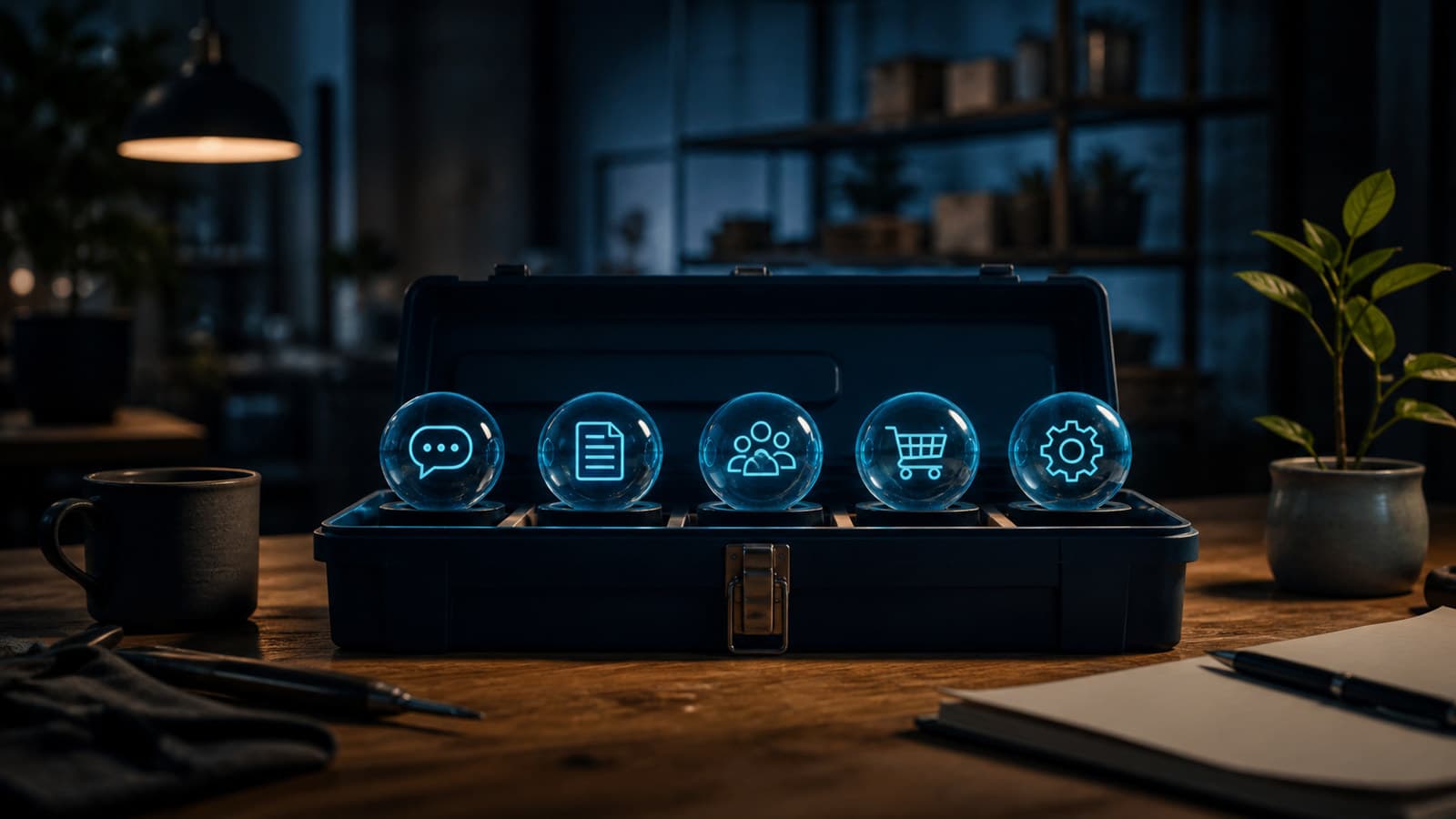
AI Automation: Getting Started as an SME
Artificial intelligence is no longer reserved for large corporations. Small and medium-sized businesses can now deploy AI solutions with manageable effort and see measurable results almost immediately. But where do you begin? Which areas offer the greatest leverage?
In this post, we cover five practical areas where SMEs can start with AI automation today, including concrete examples and realistic ROI estimates.
1. Customer Service: Chatbots and Auto-Responses
Customer service is one of the most natural starting points for AI automation. Modern chatbots can answer frequently asked questions, check order status, and resolve simple issues around the clock with no wait times.
Example
An e-commerce retailer deploys an AI chatbot that handles 70 percent of all incoming inquiries automatically. Only complex cases are routed to human agents. Average response time drops from 4 hours to under 30 seconds.
ROI Estimate
- Savings: 30 to 50 percent reduction in customer service costs
- Payback: Typically within 3 to 6 months
- Bonus: Higher customer satisfaction from faster responses
2. Document Processing: OCR and Automatic Classification
Many businesses process hundreds of documents daily — invoices, delivery notes, contracts, forms. AI-based document processing can automatically recognize, classify, and extract relevant data from these documents.
Example
A wholesale company receives orders via email, fax, and postal mail. An AI solution automatically identifies the document type, extracts order items, quantities, and customer data, and transfers everything directly into the ERP system. Manual data entry is nearly eliminated.
ROI Estimate
- Savings: 60 to 80 percent reduction in manual entry time
- Payback: 4 to 8 months
- Bonus: Fewer errors, faster processing times
3. Quality Control: Image Recognition and Anomaly Detection
In manufacturing and logistics, AI-powered image recognition can catch quality defects that the human eye might miss. Anomaly detection identifies deviations in real time and prevents defective products from being shipped.
Example
A food manufacturer uses cameras with AI image recognition on the production line. The system detects damaged packaging, incorrect labeling, and contamination with over 99 percent accuracy. Defective products are automatically sorted out before reaching the customer.
ROI Estimate
- Savings: 40 to 70 percent fewer complaints and returns
- Payback: 6 to 12 months
- Bonus: Better product quality, fewer recalls, stronger brand trust
4. Forecasting and Predictions: Demand Forecasting and Inventory Optimization
AI can identify patterns in historical data and create reliable forecasts. For SMEs, this means better demand predictions, optimized inventory levels, and fewer stockouts or overproduction.
Example
A parts distributor uses AI-based forecasting to predict demand for individual products. The system considers seasonal fluctuations, market trends, and even weather data. The result: 25 percent lower inventory costs with higher availability.
ROI Estimate
- Savings: 20 to 35 percent reduction in inventory costs
- Payback: 3 to 6 months
- Bonus: Less capital tied up, better delivery capability
5. Workflow Automation: Repetitive Tasks and Email Routing
Many employees spend significant time on repetitive tasks: sorting emails, transferring data between systems, generating reports, coordinating schedules. AI-powered workflow automation handles these tasks and frees up staff for higher-value work.
Example
An engineering firm automates its incoming mail processing with AI. Emails are automatically classified by project, priority, and type, then routed to the right team members. Standard inquiries receive auto-generated reply suggestions. Processing time drops by 40 percent.
ROI Estimate
- Savings: 20 to 40 percent reduction in administrative work
- Payback: 2 to 4 months
- Bonus: Happier employees, fewer errors from manual processes
Getting Started the Right Way
The key to success is not trying to automate everything at once. Instead, we recommend this approach:
- Identify a specific pain point that you can measure
- Start with a pilot project in one of the five areas above
- Measure and document the results
- Scale to additional areas once you see success
Most AI projects for SMEs can be realized with a manageable budget. What matters most is choosing the right use case and working with an experienced partner who can adapt the technology to your specific needs.
Further reading
- AI Readiness Check: 12 Questions Before Your Company Starts with AI — before you automate: is the use case ready?
- Custom Software vs Standard Software for SMEs — when building your own beats an off-the-shelf product.
Free AI Potential Analysis
Want to find out where your business has the greatest potential for AI automation? We offer a free AI potential analysis where we review your processes together and provide concrete recommendations. No obligation, no sales pressure — just an honest conversation about where AI can create the most value for you.